
GM 8.3L Duramax Diesel: Gale Banks Does the Math
Gale Banks breaks down the math behind GM’s new 8.3L Duramax V8 (L6P “Mongoose”), evaluating its 555 HP rating, CGI block, flat torque curve, and how a Derringer tuner on an L5P beats it today.




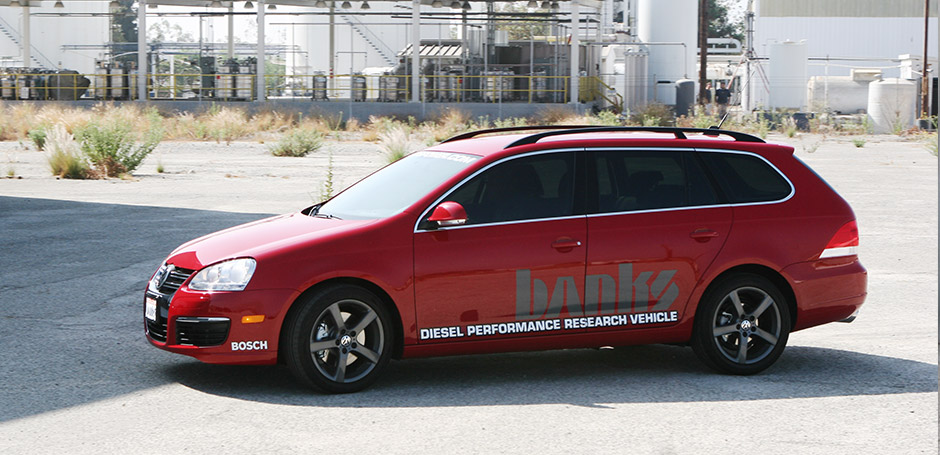
Current diesel-powered passenger cars, like the Jetta TDI and Golf TDI, offer outstanding torque and plenty of usable horsepower. That abundance of torque requires some beefy components to handle internal stresses; Banks sees an opportunity to develop a low-mass (engine weight relative to horsepower) diesel that generates more horsepower and, therefore, can reach greater speeds. It’s an idea more applicable to his dragsters than the Jetta SportWagen, but such advances would likely make their way into our daily commuters.
Famed Hot Rodder Sees Opportunity in Clean Diesel Tech
Courage. Determination. Perseverance. Persistence. They’re the words you see on those workplace posters, aimed at rallying the troops and inspiring residents of Office Space-type cubicles to put their noses to the grindstone. Sure they’re heavy on the cheesy factor, but the message they convey is behind the success of every world-class athlete and Fortune 500 company. No framed “Complacency” posters in these halls.
That refusal to find satisfaction with the status quo is behind the development of all Volkswagen products, and it inevitably leads to one question: What if…? As luck would have it, one of the most respected members of the aftermarket community shares that same mindset, and he’s crazy about diesels.
His name is Gale Banks, founder of Gale Banks Engineering. We recently had the opportunity to sit in on a discussion between Banks and the automotive press, and came away with a genuine hot-rodder’s perspective on the future of clean diesel engines and fuels.

About Gale Banks
Gale Banks has had a lifelong love affair with the internal combustion engine, from tearing apart his first engine at 14 years old to currently researching aftermarket applications for Volkswagen’s 2.0-liter turbocharged clean diesel offering. His work is complex, yet his goal is simple: Improve fuel economy and performance.
Banks’ resume highlights the development of General Motors’ Duramax diesel engine, diesel marine engines used by the private sector and the military, and the world’s fastest diesel-powered drag race truck.
Clean Diesel Technology Today and Tomorrow
“It’s time to change your minds about diesel, folks. It’s clean.” It might seem odd for Banks to make that statement to a roomful of knowledgeable automotive journalists, but it’s a message that bears repeating. With a stake in different manufacturers’ programs, not to mention his own product line, Banks has reason to promote diesel development, but what he envisions for the future differs significantly from what we drive today.
Current diesel-powered passenger cars, like the Jetta TDI and Golf TDI, offer outstanding torque and plenty of usable horsepower. That abundance of torque requires some beefy components to handle internal stresses; Banks sees an opportunity to develop a low-mass (engine weight relative to horsepower) diesel that generates more horsepower and, therefore, can reach greater speeds. It’s an idea more applicable to his dragsters than the Jetta SportWagen, but such advances would likely make their way into our daily commuters.
Another technology that excites Banks is already in the works. It’s dubbed supercritical diesel fuel injection. This is a system that heats diesel fuel, thereby lowering its viscosity and allowing it to be injected more quickly. According to an article published by MIT, supercritical diesel fuel injection can significantly cut emissions and provide a slight improvement in terms of efficiency.

Future Clean Diesel Fuels
“Environmentalists pushed diesel to clean up its act, and thereby guaranteed its future.” Clearly, Gale Banks believes clean diesel engines are here to stay, but that’s not necessarily the case for today’s diesel fuel.
Thanks in part to the distribution of Ultra-Low Sulfur Diesel (ULSD) fuel, all-new Volkswagen TDI models meet stringent air quality standards set for all 50 states, but so-called second-generation biodiesel is quickly making a name for itself.
One type is cellulosic, which can be created from agricultural byproducts, wood chips, and other non-food materials. The second centers around the use of algae. Yes, that slimy green goo that grows in your pool is actually largely comprised of lipid oil; ExxonMobil and Chevron are just two companies heavily invested in its development as an alternative fuel source.
Finally, there’s the approach being taken by Valero, an energy company that has partnered with a food byproduct recycling company to build a renewable diesel fuel refinery.
Related links:
Volkswagen TDI Clean Diesel & Hybrid
Explore the VW Sportswagen Jetta




Gale Banks breaks down the math behind GM’s new 8.3L Duramax V8 (L6P “Mongoose”), evaluating its 555 HP rating, CGI block, flat torque curve, and how a Derringer tuner on an L5P beats it today.
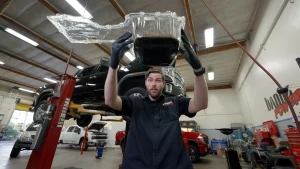
Discover the dirty secret hidden in factory Duramax oil pans: an elevated drain plug that traps nearly a half-quart of contaminated sludge every oil change, and how the Banks CoolRunner pan cures it with complete drainage, FlowThru cooling fins, and +2 quarts capacity.

Banks introduces the world’s only true 5-inch DPF-back Monster Exhaust for 2024–2026 Duramax 6.6L trucks, using a patented Exhaust Pressure Module to cut backpressure without triggering check engine lights or melting trailers.
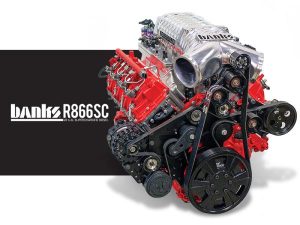
The Banks R866SC V8 6.6L Supercharged Diesel is an engineering powerhouse delivering 600-650 horsepower. Featuring a 3.8L Whipple supercharger and custom FEAD, this complete package is built for extreme performance.

Banks Derringer High Output tuner does more than just add power to your 2024–2026 Duramax 6.6L. Level 2 is specifically calibrated for improving fuel economyby adding more boost and optimizing fuel injection. And, Level 2 delivers an impressive 60 hp and 90 lb-ft to the wheels. For even more power, bump up to Levels 3-6 for power increases up to 86 hp and 178 […]

On all 6.7L Cummins, the factory grid-heater bolt is a known risk: if it breaks loose and reaches cylinder #6, engines are replaced—not repaired—an outcome costing north of $30,000. If you do nothing: the stock grid-heater bolt stays in the system—every start is a roll of the dice, and other replacements “fixes” still choke air flow. […]
Hector’s 2015 RAM 3500 threw an intake-heater code, then his remote start system stopped working. He pulled his intake plate after reading about the killer grid heater bolt. To his horror and delight, he saw “the nut had broken off and was just sitting there” — one drive from disaster. Rather than install another factory heater plate, […]
Your 6.7L’s stock intake elbow kills airflow with its sharp bend and restrictive air path. That added restriction makes the turbo work harder and dulls response. A Banks Monster-Ram intake elbow takes a different route—literally. We rerouted the #1 fuel line and replaced the restrictive grid heater which allowed us to open the air path and remove […]
RAM 6.7L engines can suffer catastrophic damage as a result of a bolt inside the factory grid heater, which melts and drops into the intake manifold. In this 8-minute close-up, you’ll see exactly what fails, where to look on your truck, and the upgrade that removes the weak link. If you own a 6.7L, this […]

Banks Power by the Numbers breaks down the real data behind a record-setting 2025—from millions of video views to testing fuel burned and parts shipped worldwide.

A Canadian diesel mechanic visits Banks Power and gets a firsthand lesson from Gale Banks on air density, cold starts, and real engineering behind reliable diesel performance.

“This video is a huge full-circle moment for me,” says an emotional Dave Bell, owner of Dave’s Auto Center in Centerville, Utah and the star of the wildly popular YouTube channel of the same name. “I’ve looked up to Gale Banks since I was 15 years old,” Bell continues. “His engineering and genius has paved the […]