



00:00 what rocket science thought of that that’s the culprit right there that sucks we’re getting rid of it imagine owning a fleet of rams knowing there’s a ticking Time Bomb under the hood of every one of them grid heater failure is real and it’s taking out engines but
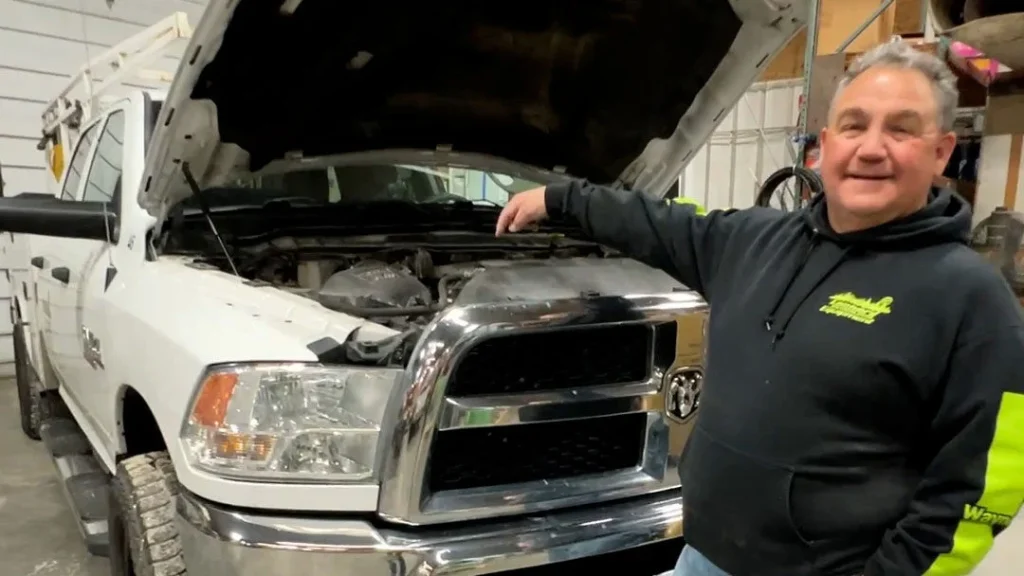
00:18 there’s a way to prevent a $1 Bolt from killing your $30,000 engine you know what I’ll let Steve from Leonard petroleum equipment explain thanks Gil this is one of our 45 fleet trucks all of a sudden I get I get a phone call one day and they’re saying hey I got a knock
00:35 coming out of this engine I said well let’s get it by the mechanic and get it checked out inside number six cylinder they find the end of the bolt in the nut that has separated off the heat grid this nut and rest of the bolt fell inside the intake it cost me a little over
00:53 $60,000 cuz I bought a brand new truck then had to move all the bolt bins toolboxes lift gate off that truck onto the new truck so today we’re going to be working on a 2018 a 2013 and a 2020 with 45 trucks I can’t afford to have one down even a day we have $2.7 million in Ram trucks here I need to
01:16 keep them running down the road that’s why we invested in the banks monster Rams we’re seeing mileage gains too and it’s a benefit you can tell why look how restrictive the factory intake is another one down 30 to go
Imagine managing a fleet of 45 heavy-duty RAM diesel trucks worth over $2.7 million, knowing that a single factory hardware flaw could wipe out an engine without warning.
For Steve King, owner of Idaho-based Leonard Petroleum Equipment, that nightmare became reality. One of his commercial service trucks developed an unexpected engine knock. When mechanics pulled the cylinder head, they found catastrophic devastation in cylinder #6: the factory grid heater stud and nut had vibrated loose, dropped into the intake plenum, and pulverized the piston and valves.
The failure didn’t just ruin a $30,000 Cummins engine—it cost over $60,000 in total operational losses once new truck acquisition costs and the labor to transfer custom service bodies, bolt bins, and hydraulic lift gates were factored in.
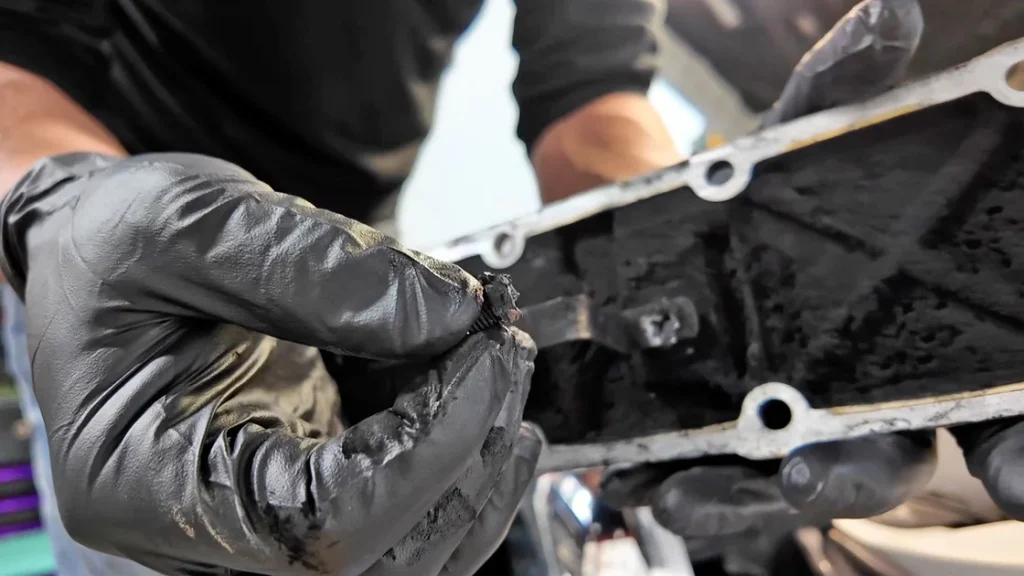
Over time, a bolt in the 2007-2024 RAM 6.7L Cummins stock grid heater deteriorates, loosens, and falls into the intake manifold. Thanks to gravity, the $1 bolt makes its way into cylinder #6. In many cases, this results in severe piston, valve, and head damage or total engine failure. Countless U.S., Canadian, and even Australian RAM owners have reported failures. While hundreds have caught it in time, others have replaced pistons, repaired cylinders and heads. Some have replaced entire engines.
Between 2007.5 and 2024, RAM 2500, 3500, 4500, and 5500 trucks equipped with the 6.7L Cummins turbo-diesel rely on an intake grid heater suspended directly above the engine’s intake runners.
Over thousands of thermal cycles, extreme engine vibration and electrical arcing degrade the factory terminal stud and retention nut. Eventually, the hardware backs off. Because of the intake manifold’s physical slope and airflow dynamics, gravity pulls the detached hardware straight into the rearmost intake port: cylinder #6.
The results are catastrophic:
Faced with 44 more trucks at risk, Leonard Petroleum Equipment chose prevention over replacement. Rather than repeatedly replacing failure-prone stock components, King partnered with Banks to retrofit his entire fleet with the Banks Monster-Ram intake system.
The Monster-Ram replaces the entire factory intake horn and failure-prone heater assembly with a high-strength cast intake elbow and a precision-machined billet intake plate. By removing the factory electrical grid from the intake tract, the drop hazard is eliminated 100%.
Furthermore, the stock intake is notorious for its squashed, choked geometry. The Monster-Ram opens up cross-sectional flow area, delivering up to 88.7% greater air mass flow than stock. For working fleets, this unrestricted air density translates to quicker turbo spool, lower exhaust gas temperatures (EGTs), and noticeable fuel mileage improvements.
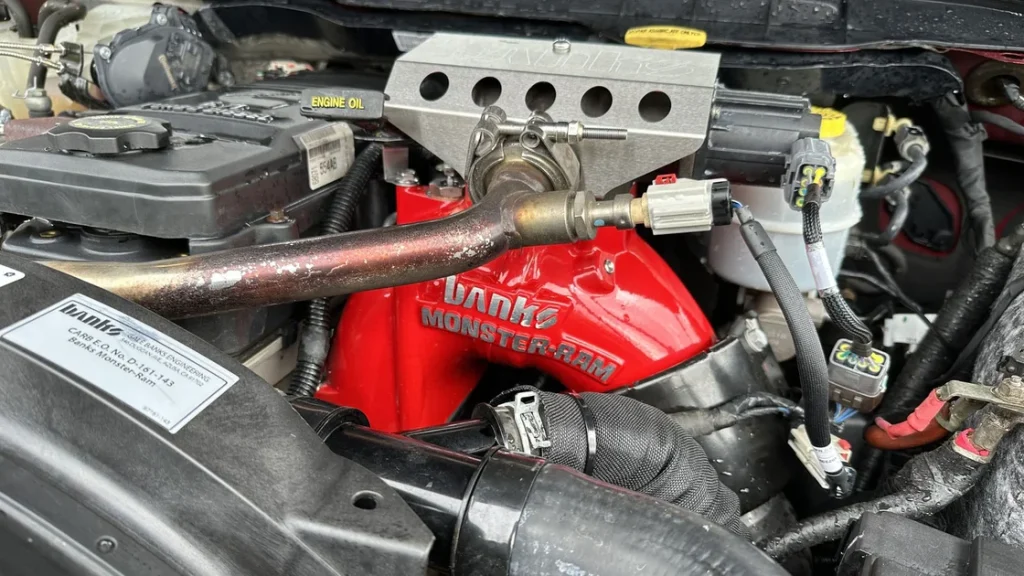
A common concern among Northern diesel operators is cold-weather starting. The Monster-Ram addresses this with drop-proof billet coil heater upgrade kits. Instead of dangling fragile elements directly over the open cylinders, Banks heating elements thread safely into designated ports in the intake elbow wall, maintaining clean intake velocity and reliable cold-crank starts down to sub-zero temperatures.
With three fleet trucks converted on camera—a 2013, a 2018, and a 2020—Leonard Petroleum is systematically outfitting the remaining 30+ vehicles. As Steve King summarized: “With 45 trucks, I can’t afford to have one down even a day. We have $2.7 million in RAM trucks here. That’s why we invested in the Banks Monster-Rams.”