



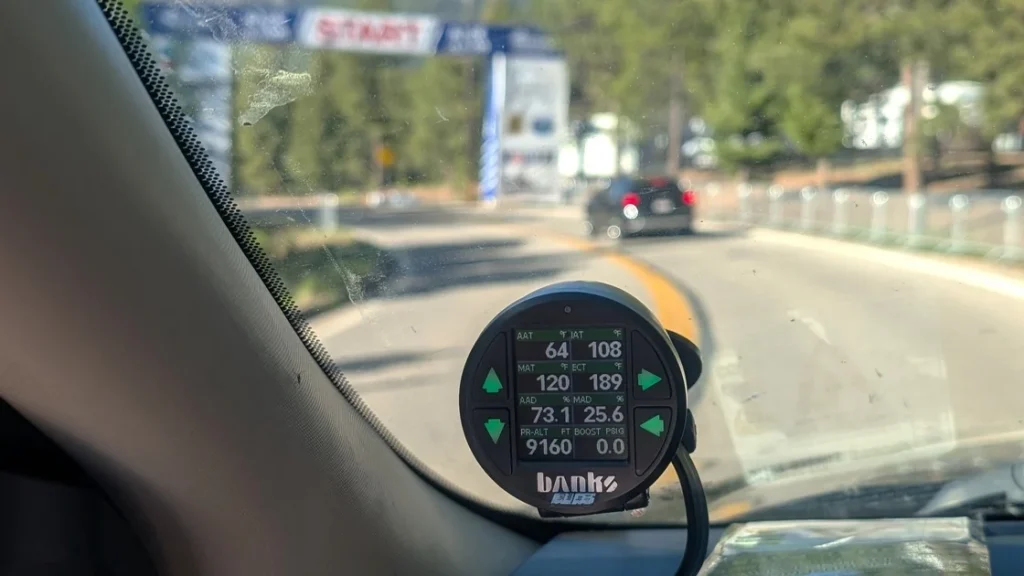
“The iDash is my window into how my vehicle is actually performing,” says Joey Rassool matter-of-factly. He’s a video producer for the likes of The Drive and Donut Media, and covers anything from vehicle reviews to grueling racing events like the Bonneville Salt Flats and Pikes Peak. Because of his background in automotive performance, he knows information is the key to getting the most out of a vehicle. “I have an iDash in my 2020 Ford Ranger, and it’s getting a decent amount of information from the sensors that are already on the truck.”

“One of the things that has always interested me was that the iDash could show me pressure altitude, because when you’re off-roading, it’s always kind of nice to know how high up you are. Say that the trail report says that you’re supposed to expect snow at 6,000-7,000 ft, it’s nice to know that you’re actually at that altitude. The pressure altitude is really good for that. Density altitude is better at telling you what’s going on with your engine, but what altitude is it that your engine is reacting like that at? It’s not as accurate to what height you’re at, but pressure altitude the iDash reports is very accurate to where you’re actually at.”
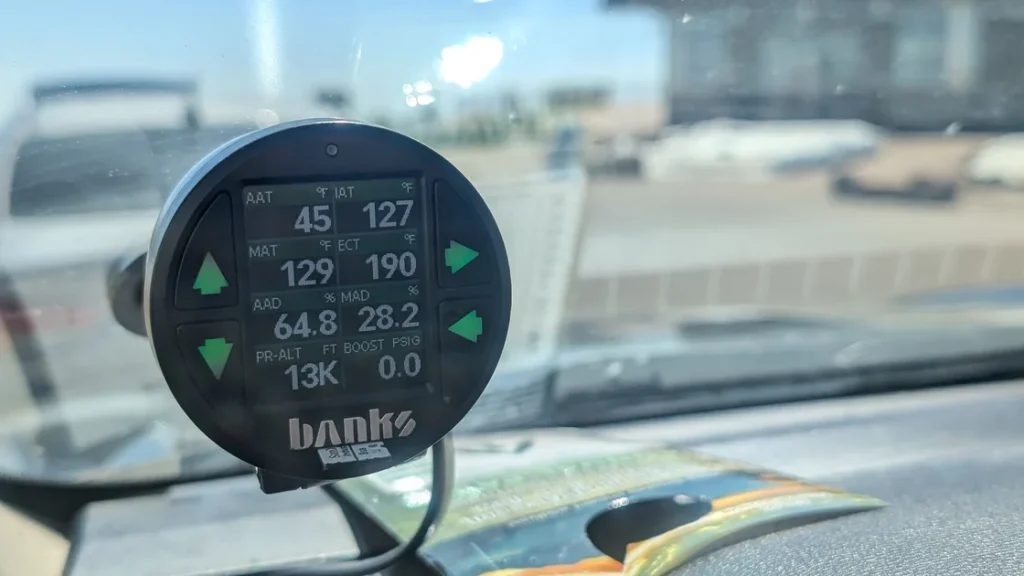
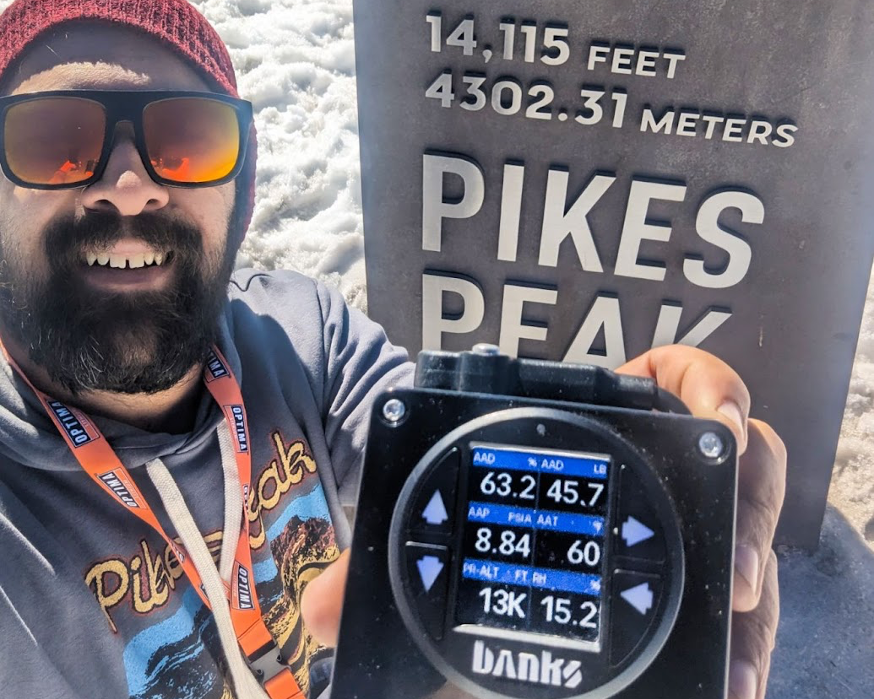
As an information junkie, Joey paid close attention on his drive from California, though New Mexico, all the way to Colorado and to Pikes Peak, ever watching the elevation climb and noting the engine’s performance on his iDash Pro. “At the starting line of the racecourse, which is 9,100 ft, ambient air density was at 73%. By the time I was at the top of the mountain, at 14,115 ft, ambient air density had dropped to 64%. I’ve been there before doing the same thing in naturally-aspirated V6 Toyota Tacoma, and that one really struggled going up there because the air got thinner as density decreased. The performance of the Ranger was much better since its engine is turbocharged.”
The reason for the difference is the performance of the two trucks is because as altitude increases, air pressure and density decrease, which means there’s less oxygen available in the air for combustion. Naturally aspirated engines (those without forced induction) rely on the engine’s ability to draw air in, and with less air available, they lose power. At higher altitudes, turbochargers help maintain engine power by compressing the thinner air, compensating for the reduced density and oxygen availability. This means a turbocharged engine can still deliver strong performance even when a naturally aspirated engine would experience a significant power loss.
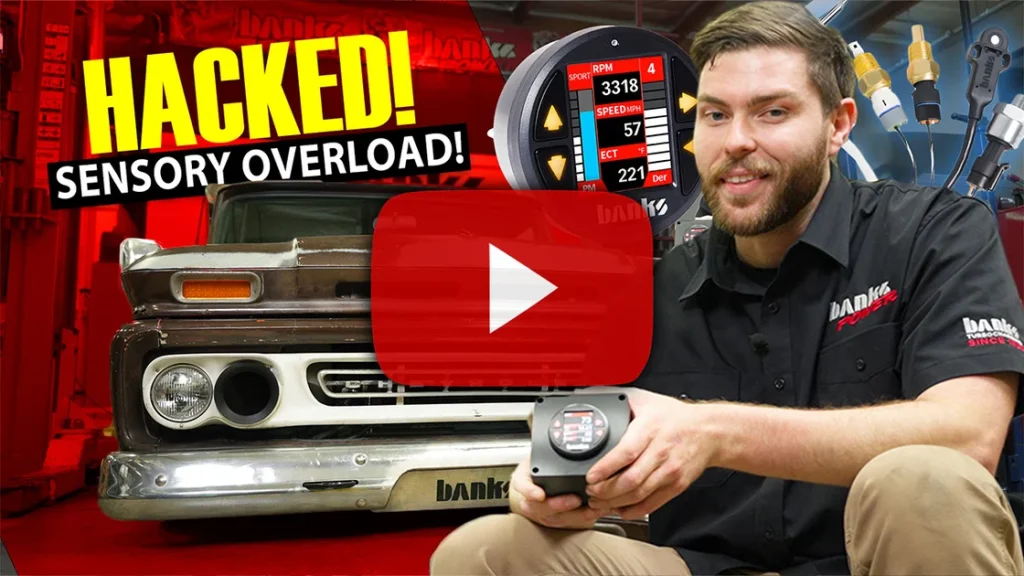
Joey also depends on the iDash Pro in his FRS and highly modified Yaris track cars. “I’m monitoring all of my temperatures in the FRS during Autocross, and I have two iDash gauges in my race Yaris. That one is going through an engine swap, and since it’s a different ECU that’ll be running it the iDash might be the only way that I will be able to read anything. As you can tell, the iDash is my go-to instrumentation.”
Unlike conventional OBD-II multi-gauges that rely on basic 8-bit microcontrollers and sluggish polling rates, the Banks iDash Pro is engineered with a high-speed automotive-grade 32-bit processor. Communicating across high-speed ISO 15765 CAN-bus networks at 500 kbps, the iDash Pro queries the factory powertrain control module for standard diagnostic trouble codes and proprietary engine sensor broadcasts at sample rates up to 100 times per second. By capturing raw, high-frequency broadcast frames directly from the vehicle bus, the instrument eliminates visual needle lag and digital buffering, providing instantaneous feedback during rapid acceleration, wide-open-throttle gear shifts, and high-G cornering.
Where standard factory dashboards stop at basic coolant temperature and estimated boost, the iDash Pro calculates advanced aerodynamic and thermodynamic parameters in real time. By continuously processing absolute manifold pressure (MAP), ambient barometric pressure, and charge-air temperature, the gauge computes Manifold Air Density (MAD)—the definitive physical metric of oxygen mass entering the combustion chambers. Road racers, drag racers, and tuners can monitor live intercooler thermal efficiency percentages, compressor pressure ratios, and density recovery across heat exchangers. This real-time insight enables drivers to identify heat soak, boost pressure drop, and air density loss well before traditional temperature needles move.
Packaged within a compact 2-1/16″ (52mm) diameter SAE bezel that integrates into standard gauge pods and A-pillar mounts, the Banks iDash Pro gauge functions as a complete, expandable telemetry hub. Utilizing Banks Bus daisy-chain architecture, users can add external sensor modules—including 4-Channel Analog (0–5V pressure and fluid transducers) and Thermocouple modules (exhaust gas temperature up to 1,800°F)—without splicing factory wiring harnesses. The integrated datalogger records up to 100 parameters simultaneously to a microSD card in universal CSV format for deep post-session analysis in MoTeC i2, MegaLogViewer, or Excel. Furthermore, built-in Bluetooth connectivity provides seamless gauge layout configuration, warning alert customization, and wireless firmware updates directly via your smartphone.