



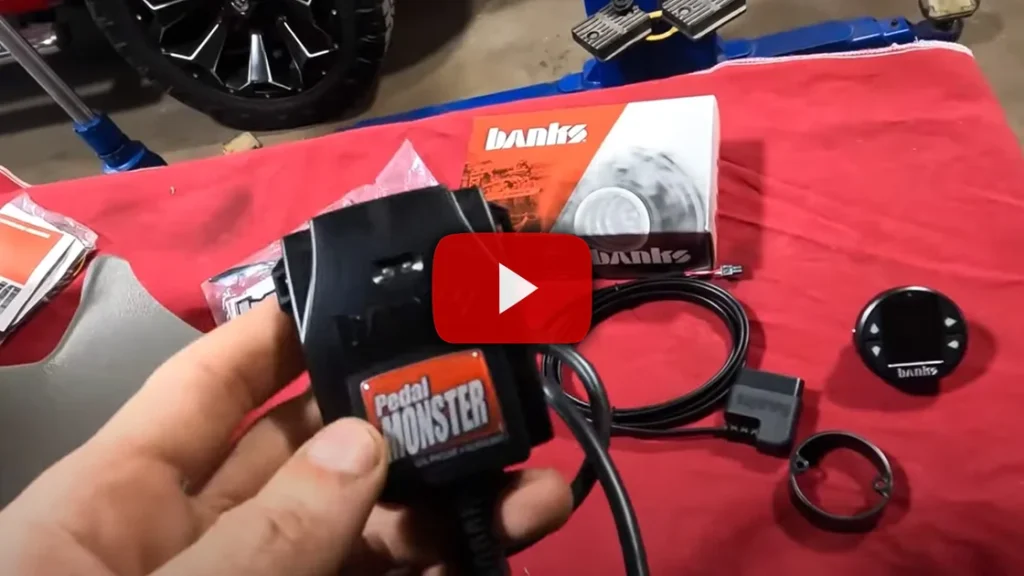
Hangry Diesel’s 2014 RAM 6.7L gets a Banks PedalMonster and immediately cranks up the fun on his test drive, even with all that wasted horsepower coming out of the tailpipe. Some guys think that if they have an engine tune, they don’t need throttle enhancement, but that engine tune is a fixed calibration when it comes to pedal feel, while PedalMonster lets you dial in exactly the throttle response you want on-the-fly!

00:01 Banks pedal monster is hooked up 2014 Cen 67 right now it’s in stock okay I’m just going to do a stock pull and then I’ll go to Sport and track I’ve seen a lot of videos where they show the install but they don’t show the before and after difference all all right we’re going to go over to
01:01 the pedal monster we’ll go to sport uh we’ll go halfway up and we’ll do the same thing I’m just going to floor and we’ll see what happens seemed kind of the same let me bump it up a little a little bit and we’ll record this record this oh there it [Music] is all right there you go
An engine tune and a throttle controller perform different jobs. An engine tune can change parameters related to engine performance, while PedalMonster changes how quickly the accelerator responds to driver input. PedalMonster does not add horsepower or replace the truck’s existing tune.
On this tuned 2014 RAM 6.7L Cummins, the driver compares the factory pedal response with different PedalMonster settings. Sport and Track modes allow the response to be adjusted without changing the engine calibration. This gives the driver another way to tailor how the truck feels during acceleration and daily driving.
Drivers should begin with a mild setting and increase the response gradually in a controlled environment. Confirm vehicle compatibility, complete the required calibration, and follow the current Banks installation instructions before driving. The best setting depends on the vehicle, existing modifications, road conditions, and driver preference.
Related PedalMonster Articles